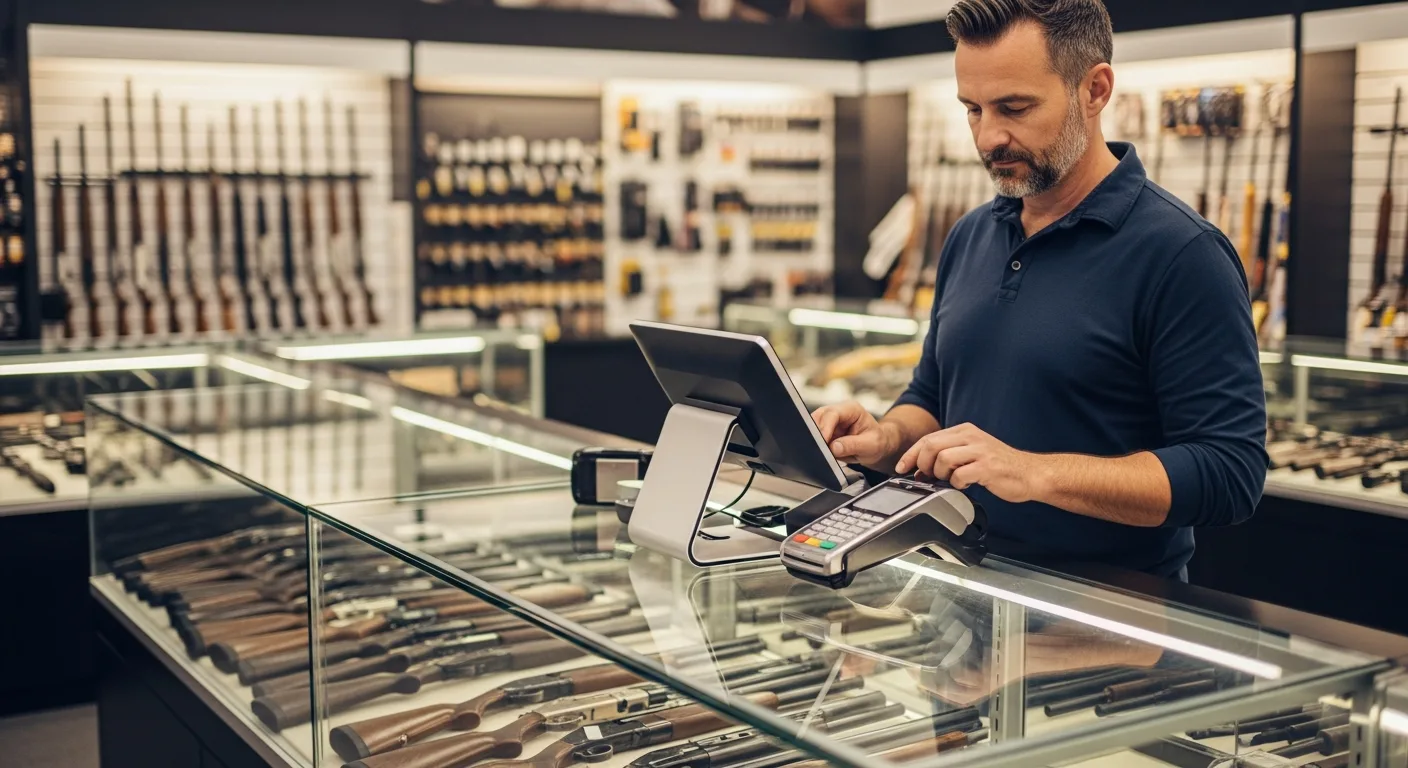
You hold a valid federal license, you follow the law to the letter, and a mainstream processor still won't touch you. That's the reality for firearms dealers: legal and legitimate, yet routinely refused by banks that don't want the category. This guide covers why firearms are high-risk, why applications get declined, what underwriters want, the compliance notes that matter, and how to get approved.
Why firearms and FFL businesses are classified as high-risk
Selling firearms is legal for licensed dealers, and the rules are clear and strict. So the high-risk label has little to do with legality and everything to do with how banks and card networks handle the category.
- Regulatory weight. Firearms sales are governed by federal and state law and overseen by the ATF. Banks see heavy compliance obligations and tread carefully.
- Reputational caution. Many processors decline the category by policy regardless of how clean the merchant is.
- Age and identity verification. Sales require verification and, for many transactions, background checks and licensed transfers, which adds operational complexity.
- Product mix. Ammunition, accessories, and certain items face their own restrictions and card network rules.
You aren't being judged for breaking rules. You're being avoided by processors that don't want to manage the rules. A specialist in firearms and FFL payment processing takes the opposite view: the category is bankable when it's done right.
Common reasons firearms applications get declined
Most declines trace to a short list:
- No valid FFL. A current, valid federal firearms license is non-negotiable. No license, no account.
- Applying to a processor that bans firearms. Many do, by policy. The approval was never going to last.
- Selling restricted items. Certain products and modifications fall outside what processors and networks permit.
- Weak compliance documentation. Unclear age-verification or transfer procedures raise flags.
- Inconsistent business details. Names, URLs, and bank accounts that don't match read as risk.
The real diagnosis
For most licensed dealers, the issue isn't your business. It's that you applied to a bank that was never going to say yes. The fix is matching with one that works the category on purpose.
What firearms underwriters want to see
Underwriters are confirming that you're licensed, compliant, and stable. Give them the evidence:
- A valid, current FFL and any required state licenses.
- Clear compliance procedures for age verification, background checks, and licensed transfers where applicable.
- A defined product catalog so underwriters know exactly what you sell.
- Business documentation: license, EIN, voided check, and processing history if you have it.
- Clean policies for returns, shipping restrictions, and customer support.
Chargebacks and compliance for firearms dealers
Firearms dealers often see fewer impulse-driven chargebacks than supplement or CBD merchants, but disputes still happen, and the compliance stakes are higher. The card networks watch dispute ratios, and your legal obligations sit on top of that.
- Document the transaction. Verification records and clear receipts protect you in a dispute.
- Use a recognizable billing descriptor so customers identify the charge.
- Spell out shipping and transfer rules so buyers know firearms ship to a licensed dealer, not a doorstep, where required.
- Confirm orders and provide tracking to cut "item not received" disputes.
Pairing your account with chargeback protection and fraud protection keeps your ratios clean and helps you respond fast when a dispute does land.
How to get approved for firearms payment processing
The path is direct:
- Confirm your FFL is current and gather any state licenses.
- Document your compliance procedures for verification and transfers.
- Define your product catalog clearly, flagging anything restricted.
- Apply with a high-risk specialist that works with firearms, not a platform that bans them.
- Set up the right tools, including a payment gateway and risk controls built for the category.
For broader context, read our high-risk merchant account guide and our breakdown of how to get approved for a high-risk merchant account. The high-risk merchant accounts overview is also a useful starting point.
How Karma Card Payments helps
We build firearms and FFL merchant accounts the right way: matched to your license, your product mix, and the federal and state rules you already follow. That means underwriting that understands the category, a compliant gateway, and chargeback and fraud tools that keep your account stable.
You stay focused on running a compliant, licensed business while your payments just work. Get started with Karma Card Payments and let's set up processing built for the way you operate. This is general information, not legal advice; always follow applicable federal and state law.